Injury and Pain Diagnosis
Find the Root Cause of Your Pain
Targeted Clinical Evaluation
Injury and Pain Diagnosis begins with a thorough evaluation to identify the root cause of your pain or dysfunction. We assess movement patterns, strength, mobility, and joint mechanics to determine the underlying issue—not just the symptoms. This allows us to create a targeted, evidence-based treatment plan tailored to your goals, whether you’re recovering from an injury, managing chronic pain, or trying to prevent future problems.
How does physical therapy help uncover the source of pain?
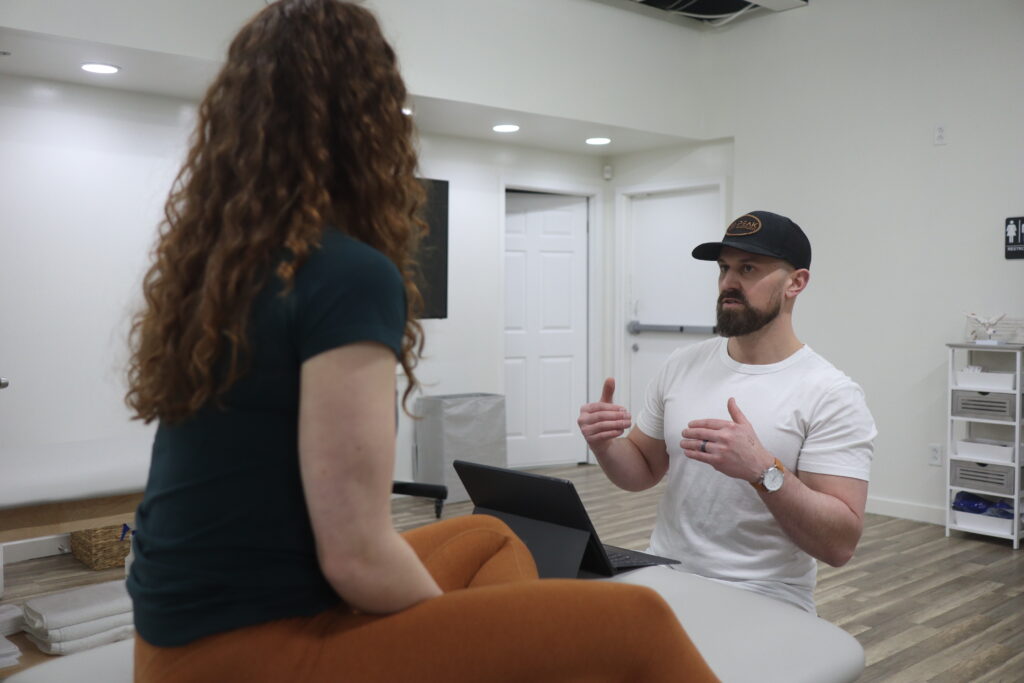
At Peak Motion Performance Physiotherapy, we use movement-based assessment, hands-on testing, and clinical reasoning to help identify patterns that may be contributing to your pain. Many musculoskeletal issues can be effectively evaluated by observing how your body moves, responds to load, and compensates under certain conditions. This approach helps us determine whether your symptoms are linked to mobility, strength, motor control, or mechanical stress — and gives us a foundation for care.
Who is this for?
This service is ideal for individuals experiencing pain or discomfort without a clear explanation, or who are unsure what their next step should be. Whether your symptoms are consistent or come and go, new or persistent, we work with active adults, athletes, and everyday individuals who want to better understand what’s contributing to their limitations — and how to begin addressing it.
What happens during the first session?
We begin with a conversation about your history, movement habits, and goals. From there, we conduct a thorough movement and orthopedic assessment, looking at joint mechanics, muscle function, and how your body tolerates specific movements. This helps us identify contributing factors and determine whether a targeted treatment approach can help you start making progress.
What types of issues do you evaluate?
We commonly assess:
- Shoulder pain with lifting or overhead movement
- Low back discomfort with sitting, standing, or bending
- Hip or groin pain with running, lunging, or squatting
- Knee pain during workouts or stairs
- Heel and foot pain during daily activity or first steps in the morning
- Numbness, tingling, or coordination changes during movement
Whether your pain began with an injury or developed gradually, we can help determine a productive starting point for care.
How does this relate to imaging?
X-rays and MRIs can provide helpful structural information, but they don’t always reflect how well someone moves or functions. Our assessment complements any medical imaging you’ve had by focusing on how your body is performing in real-time — and how we can support positive changes based on that information.
What happens next?
After the evaluation, we’ll develop a personalized treatment plan based on your specific findings. This may include hands-on techniques, mobility work, dry needling, movement retraining, or strength progression. If it seems appropriate to refer you to a physician or recommend imaging, we’ll communicate that clearly and coordinate care as needed.